Fourteen rooms. Every material named.
Five-star hospitality, residential penthouses, commercial galleries. Each project documented at the material decision level — quarry, maker, and installation recorded.
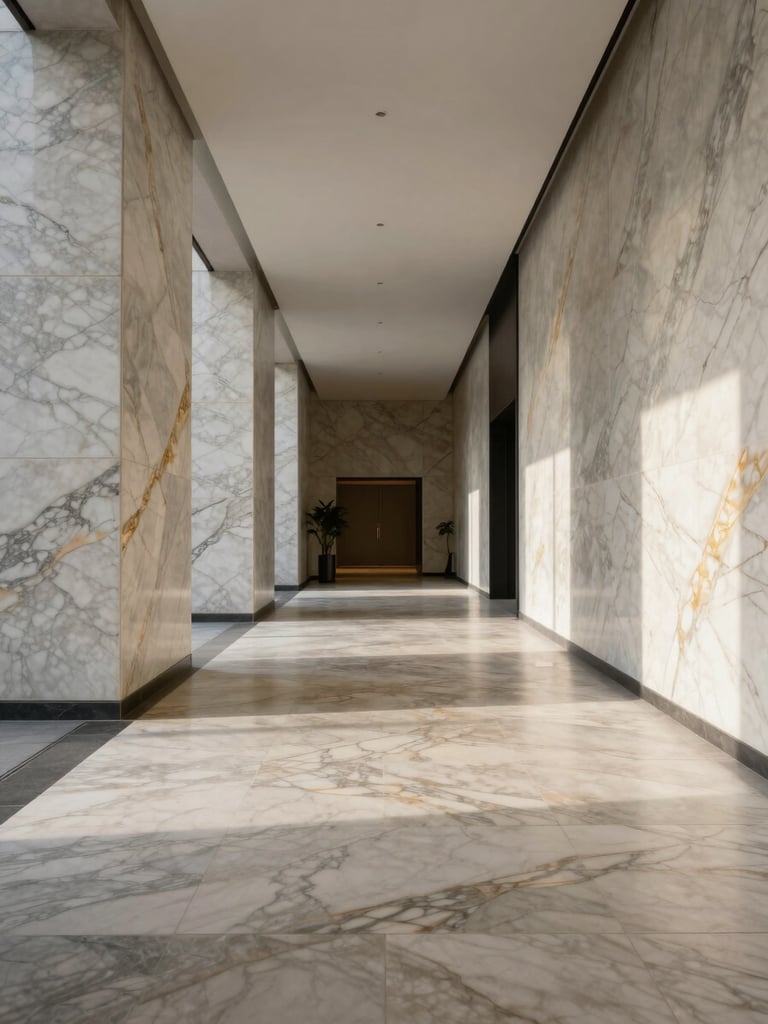
Palazzo Corridor, Hotel Venti
Calacatta Vagli from the Apuan Alps, bookmatched across 38 linear metres. Veining orientation was specified in collaboration with stonemason Luca Ferretti to align with north light entering at 11 a.m.
Materials: Calacatta Vagli marble. Partner: Ferretti Marmi, Carrara. Challenge: continuous vein match across four pilaster returns.
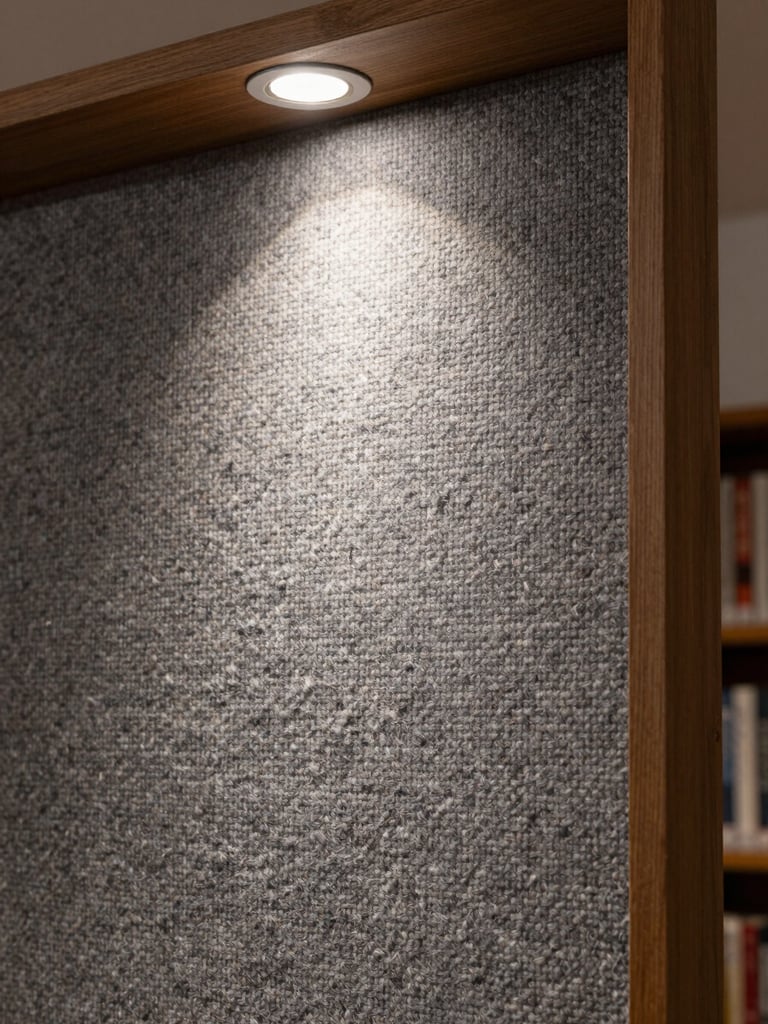
Penthouse Library, Kensington
Hand-woven wool panels from a Biella atelier running the same twill since 1961. Acoustic performance was the brief; visual disappearance was the standard.
Materials: Biella twill wool, acoustic substrate. Partner: Lanificio Cervo. Challenge: NRC 0.85 within a 14 mm wall depth.
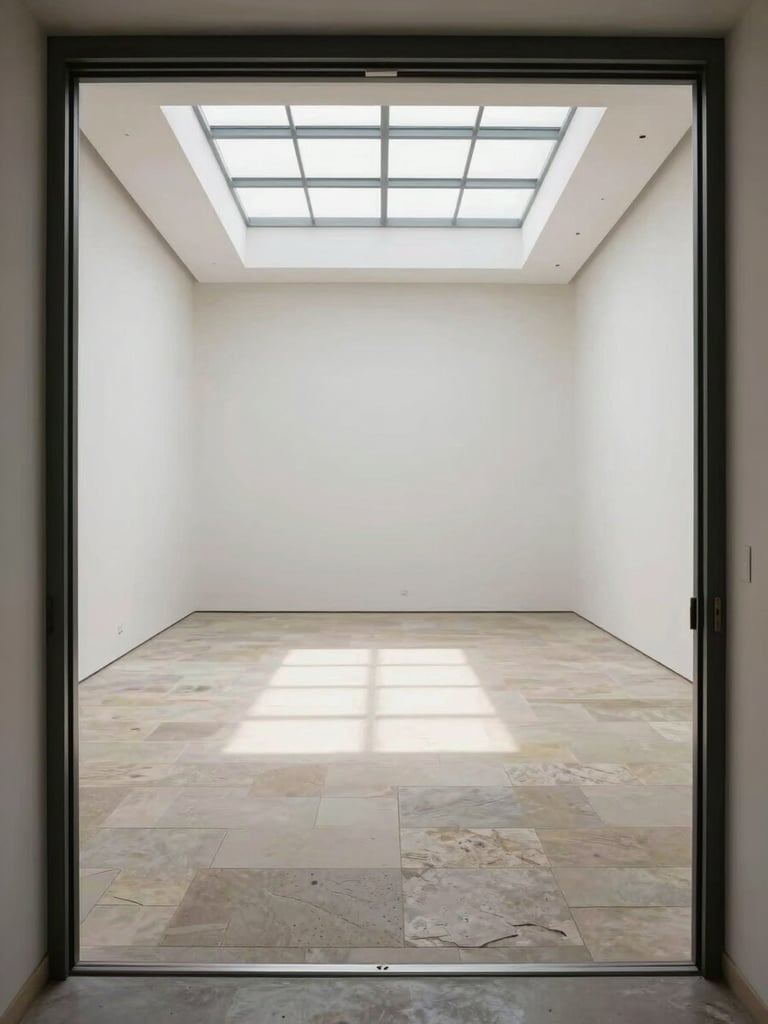
Gallery Floor, DIFC Pavilion
Pietra Serena sourced from a single Florentine quarry, honed rather than polished to eliminate reflections that compete with exhibited work. Joint width agreed with the gallery director before cutting.
Materials: Pietra Serena stone. Partner: Cave Brizzi, Florence. Challenge: zero-reflection hone across 620 m² with consistent tone.
Every surface has a named origin.
Quarry-traced slabs
Named loom, named pattern
Surface decisions, not afterthoughts
Every textile references the atelier and the loom run — weave pattern, fibre origin, and the acoustic substrate specification sit in the same project file.
Wallcoverings and bespoke finishes are specified alongside the architecture — not applied over it. Each finish references its maker and the substrate it was developed for.
Each slab carries a quarry certificate — block number, extraction date, and the face orientation relative to the mountain's vein direction.
A project begins with the right conversation.
Bring your brief, your drawings, or a single question about a material. We work from the specification stage, not after the decisions are made.